Genocide, Then and Now: Human Life and the Power of Imagery
 I’ll never forget my childhood visit to the Holocaust Museum in Washington, D.C.
As our school group filed into the building, we were each given a booklet containing the unique name and story of one victim of Hitler’s atrocities. Wandering through each of the museum’s exhibits, my classmates and I were exposed to the genocide that claimed not only the life of the person in our booklet, but those of more than six million others.
But in an entertainment culture like ours that often glorifies violence and destruction, my task of understanding the horror of genocide was more difficult than it should’ve been.
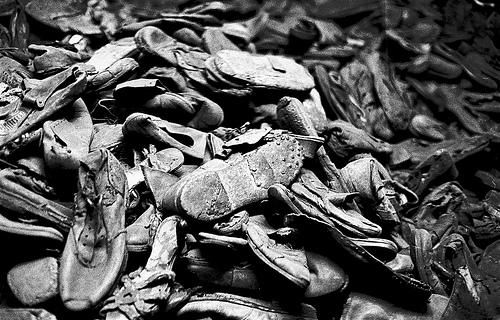
All of that changed when we came to what they call the “shoe room.” Filled with piles of shoes removed from gas chamber victims, the disturbing silence of that room is forever burned in my memory…and I’m glad of it. People once wore these shoes, I suddenly realized.
At that moment, I finally made the heart-wrenching connection between the Holocaust and the young boy described in my booklet. The two, though previously disconnected, were now inseparable.
There, surrounded by the silence of empty shoes, my eyes were opened.
Adolph Hitler had no idea that the Third Reich’s murderous actions were leaving behind the very imagery that compels modern society to repudiate Nazism. Granted, even if no photographic evidence of the Holocaust existed, Hitler’s crimes would still be unspeakably evil. But would any of us be able to summon the same grief and outrage if not for the deep emotional connection afforded by such heartbreaking images of death and destruction?
When pro-lifers talk with someone about abortion, the conversation often turns to those shocking posters used by some pro-life groups. We’ve all seen those posters — tiny human bodies, bloodied and mangled, on full-color display. Many people (including some pro-lifers) express their displeasure with pro-lifers’ use of such jarring images. Their opposition largely centers around the belief that people will be alienated by the graphic pictures.
They’re wrong.
The strong emotions elicited by those graphic posters are vital to a full grasp of the utter evil of abortion. Furthermore, the probing questions raised by the posters are integral to fostering a respect for human life and a compassion for the unborn.
Images have unique power, and God created it this way. Words can be deeply moving and inspiring, and it is for this reason that pro-life activism of words and writing must continue. But words can only accomplish so much; their effect is limited by the imagination of the hearer. Pictures, on the other hand, require no special imaginative abilities. They simply present reality as it truly is and often push the viewer to confront this reality in his own heart and mind.
Powerful images, whether they are of slave chains, mangled automobiles, aborted children, or empty shoes, force us to acknowledge the God-ordained value of human life. These images prick our hearts and consciences for a reason. Our often impassioned response to them attests to the immeasurable worth of human life created in the image of God.
Because of this, those posters of broken and bloodied babies are just as compelling as they are graphic.
Admittedly, the images of dead children are extremely disturbing. But how much more disturbing and barbaric is the “procedure” that allowed for them? May we never become so removed from the awful brutality of abortion that we forget why we fight. We do not merely fight for a lofty ideal about a “culture of life.” We fight because countless millions of our fellow bearers of God’s image have been slaughtered before our very eyes.
If abortion is to ever be ended, our fellow Americans need to see the brutal aftermath of this injustice. Perhaps God will create in their hearts the same grief and anger He feels over the shedding of innocent blood.
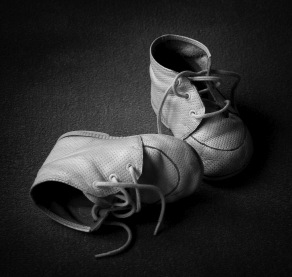
As God opens our eyes to the millions of shoes that will never be filled because of abortion, may He also ignite in our hearts and minds a passion to ensure the protection of those tiny feet yet to be formed.
Proverbs 24:11-12
Deliver those who are drawn toward death,
And hold back those stumbling to the slaughter.
If you say, “Surely we did not know this,”
Does not He who weighs the hearts consider it?
He who keeps your soul, does He not know it?
And will He not render to each man according to his deeds? (NKJV)